Watch: We drilled a hole in a dam to help restore a Blue Ribbon fishery in Utah
New TU film gives a case study of how TU is leasing water rights to benefit rural communities and restore a former Blue Ribbon trout fishery.

We bring people together to protect and restore rivers, sustain and recover trout and salmon, and in the process, make communities healthier.
We bring people together to protect and restore rivers, sustain and recover trout and salmon, and in the process, make communities healthier.
New TU film gives a case study of how TU is leasing water rights to benefit rural communities and restore a former Blue Ribbon trout fishery.
By Laura MacFarland In 2017, Trout Unlimited staff and volunteers helped to reconnect 42 miles of coldwater habitat within the Peshti go River watershed in Northern Wisconsin, as part of TU’s Great Lakes Restoration Program. In collaboration with the Forest Service and the Wisconsin Department of Natural Resources, 10 inadequate culverts were replaced with fish-friendly…
Students have connected to our restoration projects and helped us improve sections of 5 watersheds and 50 river miles for our fish and wildlife. Our goal has been to inspire students to study their local river, appreciate the unique habitat, and empower our youth and families to care for each river now and into the future.
For immediate release 6/4/2020 Contact: Shauna Stephenson shauna.stephenson@tu.org, (307) 757-7861 Legislation to fully fund LWCF and address maintenance backlog gains momentum Senate to vote on Land and Water Conservation Fund, House introduces companion bill (June 4, 2020) WASHINGTON, D.C. – On Thursday, the Senate began consideration of S.3422, the Great American Outdoors Act. Sponsored by Senator Cory Gardner (R-CO), the bill would fully and permanently fund…
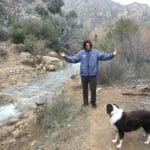
Southern steelhead country. My son and I wandered into the land of the southern steelhead yesterday. Cactus sprouted like gargoyles from the sandstone outcroppings that lined the creek up which we hiked. This winter has been profligate all across California and yet another massive cumulonimbus cloud reared up over the peaks above us. Then it…
01/15/2008 Comprehensive agreement for Klamath Basin restoration proposed, sets stage for hyrdropower agreement and dam removal FOR IMMEDIATE RELEASE January 15, 2008 CONTACT: Severn Williams California Trout 510-336-9566, C 415-336-9623 Chuck Bonham, Trout Unlimited 510-528-4164, C 510-917-8572 Steve Rothert, American Rivers 530-478-5672, C 530-277-0448 Brian Barr, National Center for Conservation Science & Policy 541-482-4459 x…
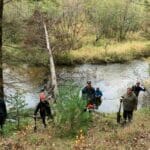
We all know that 2020 was far from a normal year. Despite the challenges brought on by the coronavirus pandemic, Trout Unlimited’s Great Lakes team soldiered on. The team, which continues to grow, was able to accomplish many key projects in the field as well as to continue advocacy efforts. Below are a few of the highlights from 2020, as well as a look ahead…
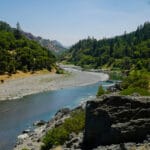
A new agreement promises to resolve decades of conflict over water use on California’s third largest watershed––and a legendary salmon and steelhead river
Monday At 3 p.m., my iPad dings with a message from the Calm app. “Your inner peace is a gift that keeps on giving,” says the app. It’s tailor made for this audience of one, downloaded in the early days of the pandemic, back when we were all trying to figure out how to be a…
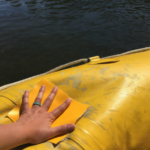
By Eric Booton I felt a slight hesitation as the group collectively chose to avert our former plans in order to float Willow Creek. I had the thought but I didn’t dare say it out loud. Was this going to be another fishless story from Willow Creek? I can’t recall how many times, but it…
7/24/2000 Hands-On, Volunteer Conservation Program Celebrates 25 Years of Rescuing Rivers Hands-On, Volunteer Conservation Program Celebrates 25 Years of Rescuing Rivers Trout Unlimited’s 2000 Embrace-A-Stream Grants Fund 47 Stream Recovery Projects Contact: 7/24/2000 — — Washington, D.C.. Trout Unlimited, the nation’s leading coldwater conservation organization, today announced recipients of the 2000 Embrace-A-Stream (EAS) grants, distributing…
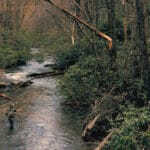
“A Beautiful Mess” premiers this week. Check it out to see why this effort is needed, how the work fits in with TU’s new Priority Waters initiative, and how streams’ trout populations are responding.
2/17/1999 Whirliing Disease: New TU Report on the “State Of The Epidemic” Whirling Disease: New TU Report on the “State Of The Epidemic” Updated Report Documents New Research and Continuing Challenges Facing Fisheries Conservationists Contact: 2/17/1999 — — Trout Unlimited today released a comprehensive new report detailing the current knowledge about whirling disease, the parasitic…

Even though they never fished, I always think of Mom and Dad when I hear the line, “In our family there was no clear line between religion and fly fishing.”
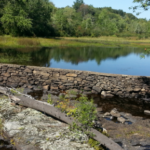
By Chris Wood Last week, I saw a video celebrating the removal of the Tack Factory Dam on Third Herring Brook in Massachusetts. Like all dam removals, it involved many partners especially the North and South Rivers Watershed Association, local TU chapters, the MA/RI Council, NOAA, and Steve Hurley of the Massachusetts Division of Fisheries…
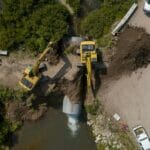
Farm Bill conservation programs actually fund a significant amount of coldwater conservation across the country, and Trout Unlimited leverages several Farm Bill programs to improve and restore coldwater streams for trout, salmon, and people.
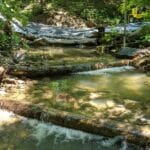
By Dylan Cooper An important historical site in Virginia got a long-awaited face-lift after more than 70 years of being hampered by the presence of man-made barriers to aquatic organism passage. Bob Downey Branch, a Class III wild trout water, is once again open for trout thanks to efforts by Trout Unlimited and the George Washington…
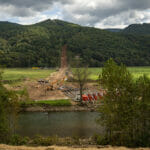
Major energy development proposals have such enormous implications for our waters and fisheries that there must be a high bar for approval
12/05/2007 New Report Looks at Impact of Climate Change on Trout and Salmon December 5, 2007 FOR IMMEDIATE RELEASE Contact: Jack Williams, TU Senior Scientist (541) 261-3960Erin Mooney TU Press Secretary (703) 284-9408 New Report Looks at Impact of Climate Change on Trout and SalmonReport Analyzes Warming Climates Effect on Fish and Rivers Washington, D.C.…

A majority of Wisconsin’s 115 fish species, including native brook trout, need to move throughout a watershed seasonally or at varying stages in their lifecycle to feed, find cooler water, avoid predators and reach spawning habitat. Research conducted in the early 1990s in Northern Wisconsin documented the seasonal movement of trout. When water temperatures reached…